
Working Environment and Health
Initiatives to Reduce Working Hours
The DeNA Group's Code of Conduct stipulates that the Group will comply with all labor laws and regulations applicable in the countries in which we operate and ensure a healthy and safe working environment for our officers and employees. All Group companies are enhancing efforts to eradicate long working hours by setting and managing benchmark working hours based on 36 agreements, health management hours, and other guidelines. Specifically, on the system side, we have introduced an alert notification system in conjunction with a time and attendance system linked to work PCs, which promotes visualization of working hours for the employees themselves, their supervisors, and human resources personnel, and we are striving to reduce working hours by predicting and preventing excessive working hours in advance. In addition, we provide periodic training for managers to raise awareness of time management among all employees, thereby improving labor productivity and enhancing work-life balance.
Major Initiatives to Reduce Working Hours
・Obtaining attendance records on work PCs
・Implementing an attendance system to enhance the convenience of working hour management
・Predicting and calculating the possibility of going over time and sending alerts
・Periodic reporting to management
・Educational activities for managers and the whole company, etc.
Management of Occupational Health and Safety
In response to the requirements of the Industrial Safety and Health Act, DeNA has established a safety policy, as well as safety and health management rules and health committee rules, to ensure that all officers and employees are comfortable and safe in the workplace. Workplace inspections by the Health Committee are conducted once a month to assess working conditions, changes in operations, sanitary conditions, etc., and to mitigate risks.
In addition, training on mental health care is provided to newly appointed managers to promote understanding of mental health problems and better enable them to provide support to their team members.
Disaster prevention measures include the adoption of a safety confirmation service to confirm the safety of officers and employees, the establishment of a fire and disaster prevention manager and a self-defense fire brigade as required by the Fire Defense Act, and the submission of a firefighting plan. We also conduct evacuation drills in our offices and conduct training sessions to prepare for possible disasters at home, and update our procedures to accommodate hybrid work arrangements that combine office and remote work.
Risk Management and Response
DeNA has established a risk management flow (a series of processes for identifying, managing, and monitoring risks) to analyze and evaluate risks and summarize measures to address them, and to manage and monitor risk information centrally on an ongoing basis. Risks related to occupational safety are also regularly evaluated and addressed. Specifically, risks related to working hours are viewed as particularly significant risks in light of DeNA's risk evaluation standards, and the HR department calculates a forecast of expected working hours at the end of each month based on the actual working hours of each employee during the month, and alerts the heads of departments and employees. The HR department reports the results of monitoring employee working hours to the Compliance and Risk Management Department.
Initiatives to Support Employee Health
The DeNA Group has been involved in health-related initiatives for society through our healthcare and sports businesses.
At DeNA, we want to disseminate good health from our valued colleagues, and in 2016, we established the CHO (Chief Health Officer) Office as a department dedicated to supporting employee health in order to ensure that everyone was in good health, and we are actively working to improve employee health. To ensure that each and every employee can continue to work vigorously in good mental and physical health, we are actively promoting various measures to maintain and promote employee health by leveraging the knowledge we have cultivated in the healthcare business and other areas. We also have a health management office where public health nurses and industrial physicians are available to provide support in the event of health consultations or physical illness. Counselors are also available to discuss health and career issues. In addition, employees can refresh their minds and bodies by getting massages in the company's massage room for a low fee.
Certified as 2025 Productivity Management Organization (White 500)

DeNA has been certified as an Outstanding Health and Productivity Management Organization (White 500)*1 for nine consecutive years, a recognition jointly awarded by the Ministry of Economy, Trade and Industry and the Nippon Kenko Kaigi. This program selects large and small to medium-sized corporations that are particularly excelling in health and productivity management, based on their initiatives that address regional health issues and health promotion efforts advocated by the Nippon Kenko Kaigi. The company has also been selected three times (in 2019, 2020, and 2024) as a KENKO Investment for Health Stock, which recognizes companies with exceptionally high evaluations among those listed on the Tokyo Stock Exchange.
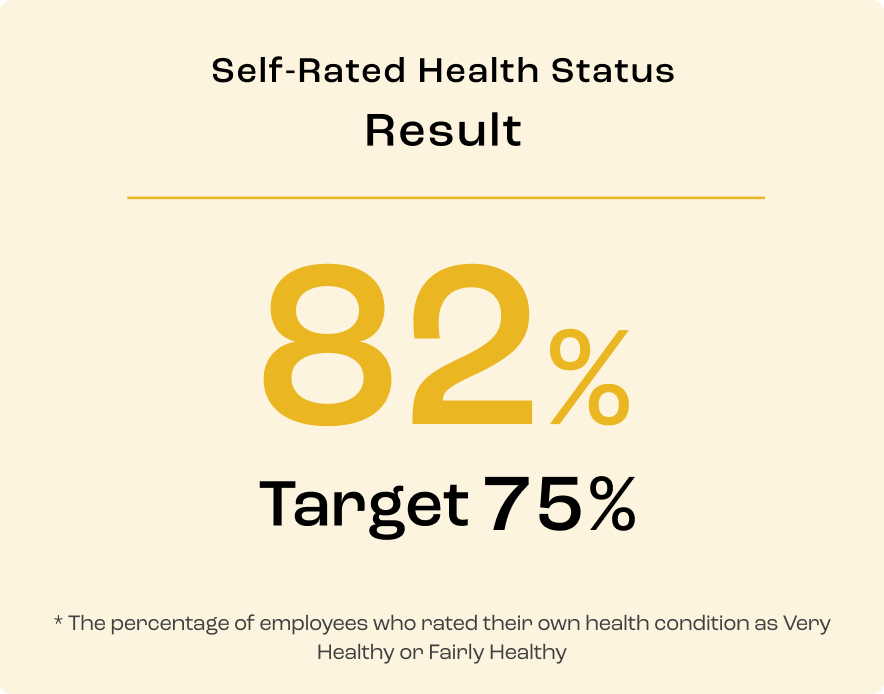
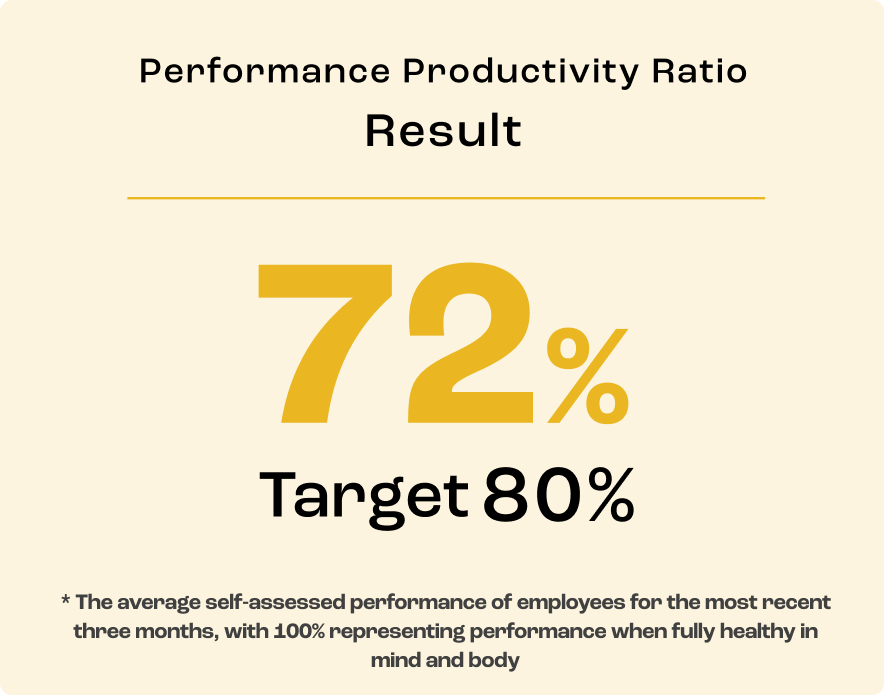
As part of our specific initiatives, we conduct an annual Lifestyle Survey to monitor employees' health-related habits from multiple perspectives, including subjective health status and the rate of productivity performance. Our goals are to achieve a subjective health status of 75% and a productivity performance rate of 80% or more. Our results were a subjective health status of 82% and a productivity performance rate of 72%.
While the diversification of work styles, including remote work, has enabled flexible work arrangements for employees, it has also brought new health challenges such as lack of exercise, feelings of loneliness, and irregular daily rhythms. Furthermore, the prolonged sitting posture common in IT companies has various negative effects, including stiff shoulders, back pain, eye strain, and poor sleep quality. To address these issues, DeNA has developed an approach based on five key pillars: work styles, medical support, mental care, diet, exercise, and sleep, and promoting communication. In fiscal year 2024, we placed a strong emphasis on mental care for employees who strive to deliver their best performance daily to achieve ambitious goals. We held multiple mental health seminars with a different perspective, including job crafting*2 using neuroscience, resilience, and mindfulness, where many participants gained knowledge and self-care techniques.
*1 Health and Productivity Management is a registered trademark of the Non-profit Organization Kenkokeiei.
*2 An approach to proactively devise and change the way one works and thinks about their job, transforming it into a fulfilling job.
Certified as a Sports Yell Company

DeNA has been certified as a Sports Yell Company by the Japan Sports Agency for the second consecutive year. This recognition is a result of our proactive initiatives to promote sports, which are aimed at improving employee health and wellness. This certification system acknowledges companies that actively engage in promoting sports for employee health, extending beyond competitive athletics.
Details on initiatives to support employee health here (Japanese only)
Payment of Allowances and Asset Building Support Initiatives
The DeNA Group complies with labor laws and regulations, including paying wages that exceed the minimum wage set by the government and equal pay for equal work. In addition to the payment of legally stipulated allowances such as overtime and late-night premium wages, DeNA also offers accident and illness compensation, among other offerings. In addition, as part of our benefits, we have an employee stock ownership plan, a defined contribution pension plan, and a defined benefit pension plan to support employees' asset building that are available for DeNA regular employees and Group company regular employees (excluding some subsidiaries).
Establishment of Multi-Stakeholder Policy
The Multi-Stakeholder Policy was established on the understanding of the importance of providing returns to employees and being considerate towards business partners by appropriately sharing the results of collaborative value creation and increased productivity with our multiple stakeholders, which in turn contributes to maintaining momentum to raise wages and sustaining economic development.
Establishment of Employee Representatives and Their Role
DeNA has established employee representatives to represent each office. Employee representatives attend Health Committee meetings, and Labor-Management Committee meetings, and submit opinions on revisions to employment regulations and conclude labor-management agreements. Employee representatives are protected by requirements to comply with the prohibition of disadvantageous treatment stipulated in the Labor Standards Act.
ESG Data
List of Training and Support Programs
Respect for Human Rights