
Community
Collaboration with Local Governments
The DeNA Group is working on machizukuri with sports as its starting point. We are working on machizukuri together with a wide range of stakeholders, including government bodies, partner companies, and local residents, with the aim of spreading the excitement generated at stadiums and arenas throughout the entire city, creating a city that everyone feels like visiting and can enjoy staying in 365 days a year, not just on game days.
Comprehensive Partnership Agreement with Yokohama City: the “I☆YOKOHAMA Agreement”
In March 2017, DeNA, Yokohama DeNA BayStars, and Yokohama Stadium entered into a comprehensive partnership agreement with Yokohama City for the promotion of sports and revitalization of the local economy, among other goals. We are carrying out various initiatives in cooperation and collaboration on the following matters.
(1) Matters related to the promotion of sports among citizens
(2) Matters related to health promotion for citizens
(3) Matters related to local economic revitalization and machizukuri
(4) Matters related to the healthy development of young people, child-rearing support, and education
(5) Other matters related to improving services for citizens
Concluded a “Comprehensive Agreement on Cooperation and Collaboration” with Kanagawa Prefecture
In January 2026, DeNA concluded a “Comprehensive Agreement on Cooperation and Collaboration” with Kanagawa Prefecture, aimed at promoting sports, advancing an inclusive society, and improving pre-symptomatic health conditions (mibyo), among other goals. The purpose of this comprehensive agreement is to improve services for prefectural residents and revitalize the region by responding quickly and appropriately to local needs. As the first measure under this agreement, and as part of the “Yokohama DeNA BayStars 15th ANNIVERSARY” project commemorating the 15th year since the team’s founding, we created “local Starman” designs for each of the 33 municipalities in the prefecture, featuring DB.Starman (nicknamed “Starman”), the official mascot of the Yokohama DeNA BayStars, and provided the illustration data free of charge to all 33 municipalities in the prefecture.
(Press release (Japanese only): https://dena.com/jp/news/5337/)
Machizukuri in the Yokohama and Kannai Area, Starting from Yokohama Stadium and Yokohama Park

DeNA and Yokohama Stadium Co., Ltd. have been holding BALLPARK FANTASIA, an activity and illumination event that utilizes Yokohama Stadium and Yokohama Park on days when no professional baseball games are held, since 2020. The aim is to make effective use of the facilities and the park during the professional baseball off-season and to serve as a starting point for creating future vibrancy in the Kannai and Kangai areas. Through 2023, the event was held once a year in winter. In 2024, as an attempt to create vibrancy regularly regardless of the professional baseball season, we held the event three times, in July, September, and November. At “BALLPARK ADVENTURE by BALLPARK FANTASIA,” held in November 2024, we prepared activity content in Yokohama Park that visitors could enjoy using both body and mind, and approximately 33,000 people visited over two days.
From “BALLPARK FANTASIA” to “BALLPARK Xmas YOKOHAMA KANNAI”
In 2025, the sixth year since we began “BALLPARK FANTASIA,” we aimed to expand the scale of the vibrancy and held “BALLPARK Xmas YOKOHAMA KANNAI 2025,” a 35-day Christmas event where visitors could enjoy illuminations and activities. Approximately 600,000 people visited during the event period. By collaborating not only at the main venue of Yokohama Park but also with Nihon-Odori Avenue and Yokohama Red Brick Warehouse, we were able to encourage visitors to move around the entire area during the Christmas season.
BALLPARK Xmas YOKOHAMA KANNAI Official Site (Japanese only)
“BASEGATE YOKOHAMA KANNAI” and the “Yokohama City Odori Park Zones 1–3 Renewal Project”
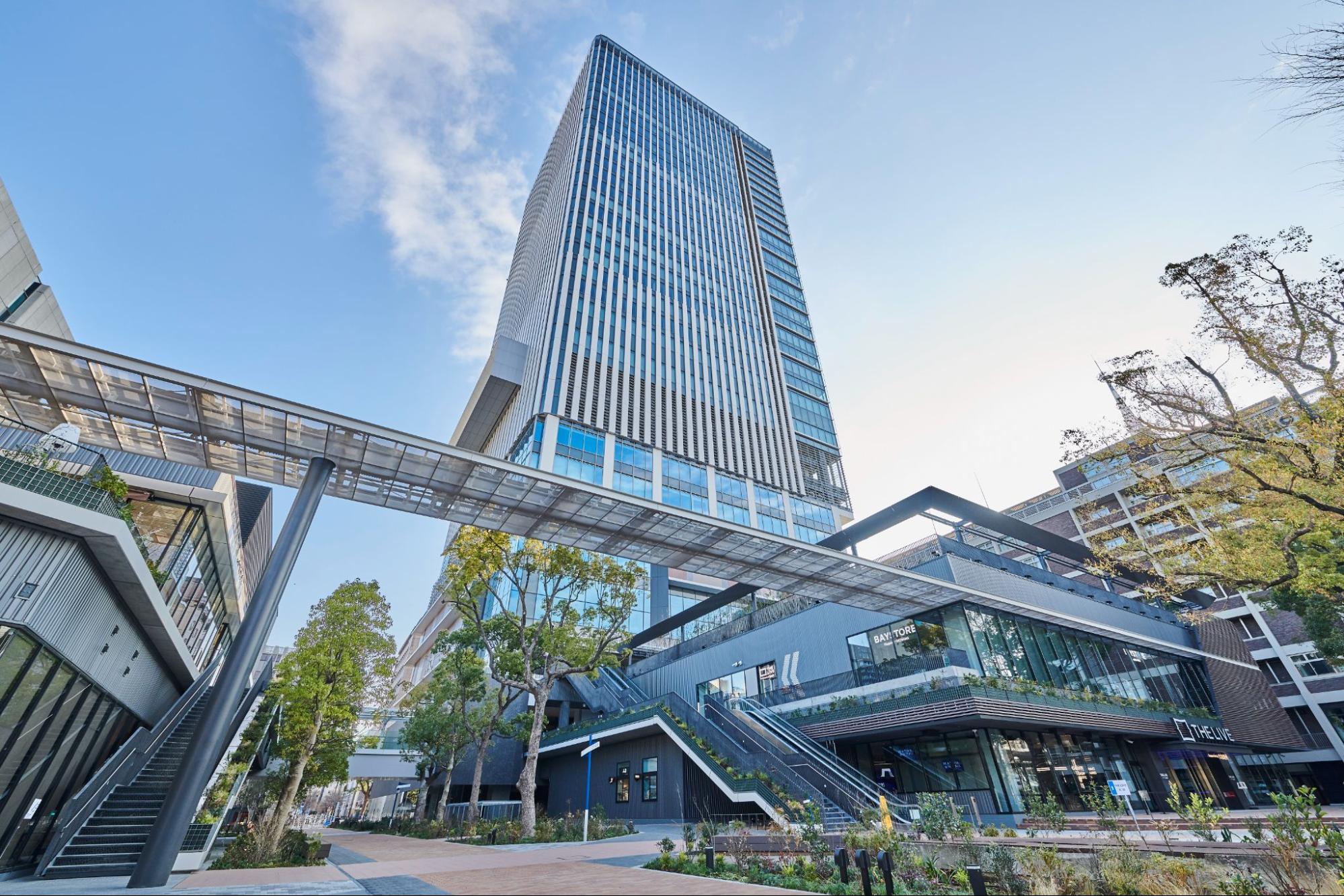
In March 2026, the large-scale mixed-use complex “BASEGATE YOKOHAMA KANNAI” opened in front of JR Kannai Station. DeNA is participating in the development of the complex as a member of the consortium led by Mitsui Fudosan Co., Ltd. In addition, we are working to create vibrancy through the operation of directly managed facilities such as “Wonderia Yokohama Supported by Umios” and “THE LIVE Supported by Daiwa Jisho” (planned and operated by the Yokohama DeNA BayStars). Furthermore, the consortium companies that developed the complex—Mitsui Fudosan Co., Ltd., Keikyu Corporation, DeNA, and TOKYU CORPORATION—have also been selected as the project operator for the “Yokohama City Odori Park Zones 1–3 Renewal Project,” located near the complex, and in February 2025 signed a basic agreement with Yokohama City. This project will renew Zones 1 through 3, on the JR Kannai Station side, of the park’s eight zones, with the aim of opening in the spring of 2027. Through collaboration between Odori Park and BASEGATE YOKOHAMA KANNAI, we will advance the project in line with the “Odori Park Management Plan,” which outlines the park’s future vision under the concept of “LIVE (Live Vibrantly) x PARK,” based on Yokohama City’s machizukuri policy, the “Kannai Station Area Concept Plan.”
Going forward, we will continue to work with many partners, including neighboring businesses, transportation operators, and local governments, to create vibrancy at Yokohama Stadium and Yokohama Park, and in the surrounding area, even on days when no professional baseball games are held at Yokohama Stadium.
BASEGATE YOKOHAMA KANNAI Receives the Highest Five-Star Rating in the DBJ Green Building Certification
The tower of “BASEGATE YOKOHAMA KANNAI” has received the DBJ Green Building Certification’s highest rank of five stars, as a “building with exceptional environmental and social awareness that is among the best in Japan.”
The DBJ Green Building Certification is a certification program established in April 2011 by the Development Bank of Japan (DBJ) to support real estate with environmental and social awareness (“Green Buildings”). Based on a comprehensive evaluation that takes into account not only the environmental performance of the target property but also its response to various stakeholders, including consideration for disaster prevention and the community, the program evaluates and certifies real estate that society and the economy demand, and supports those efforts.
The tower of “BASEGATE YOKOHAMA KANNAI” excels in the area of “Resilience to Crisis” compared with the average of assets of the same rank, and also received high marks in the area of “Consideration for Diversity and the Surrounding Environment.” In “Resilience to Crisis,” it was recognized for enhancing the disaster prevention and security of the facility through measures such as installing waterproof panels and doors in consideration of flood risk on hazard maps, adopting seismic control construction methods, and concluding an agreement with Yokohama City on temporary shelter facilities in the event of a disaster. In “Consideration for Diversity and the Surrounding Environment,” it was recognized for its consideration of the diversity of users through the installation of universally designed elevators and multifunctional restrooms, and for contributing to the creation of a local community and the preservation of Yokohama’s culture and history by developing pedestrian walkways and plazas as places of relaxation for citizens in its exterior grounds and installing historical display panels on the premises.
(Press release (Japanese only): https://dena.com/jp/news/5420/)
Kawasaki! Arena City Project

DeNA is promoting the “Kawasaki Arena-City Project” together with Keikyu Corporation, aiming to build and open a mixed-use entertainment facility, including an arena to be used by the Kawasaki Brave Thunders, in the area adjacent to Keikyu Kawasaki Station. The project goes beyond constructing and opening the facility. We are advancing its development with the following three elements as priorities, aiming to promote economic revitalization by creating new vibrancy in the surrounding area and, further, to create new culture from this location.
-
Arena city development in harmony with the city
- Development of the new arena, with construction scheduled to begin in 2027 and the opening scheduled for October 2030
- Development of a rooftop park, a world first* for an arena with a capacity of more than 10,000 people
- Coordination with the maintenance and development of the Tama River riverbed area
-
Development of content that brings vibrancy to the city
- Creating vibrancy as the venue for the Kawasaki Brave Thunders’ home games
- Developing sports and live entertainment events centered on Kawasaki culture, such as dance
-
Development of a sustainable city
- With the arena city, which is expected to draw 3.3 million visitors annually, as the stage, we aim to become a global benchmark for next-generation urban models, as an implementation-oriented sustainability platform that takes on the resolution of social issues through co-creation with partner companies
Going forward, until the opening, we will create opportunities to experience a wide range of entertainment genres, such as sports and live events, and extraordinary experiences. By repeatedly verifying the impact on the local community, we will clarify what the facility should be after opening.
Initiatives to Date
From April to November 2025, we opened “Kawasaki Spark,” a limited-time space where visitors could casually enjoy urban sports, on the planned arena construction site. Equipped with a 3-on-3 basketball court, courses for riding vehicles such as skateboards and Strider bikes, and parkour equipment, it offered a space where visitors could casually try urban sports.
In addition, the “Kawasaki Bunka Kaikan,” operated since 2022 by DeNA Kawasaki Brave Thunders Co., Ltd., has played a role as one of the “everyday facilities” under the “Basic Plan for Environmental Development Toward Machizukuri Through the Promotion of Youth Culture.” Because of the redevelopment project at the west exit of Keikyu Kawasaki Station, the facility has been relocated, and since September 2025 DeNA has been operating it as “Kawasaki Bunka Park” in collaboration with the Kawasaki Brave Thunders. We use it as a place to create an environment for developing the new players who will shape the future and to create new cultural value from Kawasaki, and we support young talents taking on challenges in urban sports centered on basketball and dance, contributing to the realization of the “city where the younger generation gathers and creates vibrancy” that Kawasaki City aims for.
Toward “development of content that brings vibrancy to the city,” we are participating in the executive committee of “KAWASAKI FESTIVAL 2026,” an urban festival to be held for the first time in the area around Kawasaki Station in November 2026, and are working to create new vibrancy in the city ahead of the opening of the arena city.
Kawasaki Arena-City Project Special Site (Japanese Only)
Promoting the Jimoto Ai Project by S.C. Sagamihara
S.C. Sagamihara launched the “Jimoto Ai Project (Local Love Project)” in September 2023, the 15th anniversary of the club’s founding, aiming to resolve social issues in its hometown (Sagamihara City, Zama City, Ayase City, Ebina City, and Aikawa Town). In cooperation with local governments, companies, fans, and residents, this project sets three priority areas—Children and Education, Well-being, and Environmental Conservation—and promotes mid- to long-term, sustainable community contribution activities.
Specifically, we implement the Yume Support Classroom (Dream Support Classroom), a school assistance project where players visit elementary and junior high schools to personally convey to children the importance of having dreams. Furthermore, with the goal of providing local children with opportunities to connect with local professional soccer players and matches, gain inspiration, and feel excited, we issue and operate the Kodomo Free Pass (Children's Free Pass) for children of elementary school age and younger residing in the hometown area, allowing them to watch J.League matches for free, thanks to the cooperation of partner companies who share our philosophy.
In addition, Gion Co., Ltd., the NPO Food Community, and S.C. Sagamihara have concluded the Jimoto Ai Project: Food Drive Promotion Partner Agreement, working together to resolve the food loss issue and provide support through food to households raising children and those facing financial difficulties.
As an environmental conservation initiative, we have signed a Partnership Agreement for Expanding the Use of Sagamihara Tsukui Timber with Sagamihara City, creating opportunities to connect the forest with our fans, supporters, and citizens. As part of this, we conduct activities that allow participants to experience the forest cycle.
Through these activities, the number of community engagement activities reached 170 in 2025, and the number of people reached through these activities totaled 94,685.
S.C. Sagamihara Jimoto Ai Project (Japanese only)
Comprehensive Partnership Agreement with Shibuya Ward

In December 2017, DeNA signed the "Shibuya Social Action Partner (S-SAP) Agreement(Japanese Only)," a comprehensive partnership agreement with Shibuya Ward to work together to resolve issues in the local community. DeNA is working with Shibuya Ward over the mid to long term to provide a variety of community support through activities such as improving the health and productivity of people working in Shibuya Ward, and providing programming education for young elementary school students.
Agreement with Taraki Town, Kumamoto Prefecture, on IT Human Resource Development Project
In August 2021, Taraki Town, Kumamoto Prefecture, and DeNA concluded an "Agreement on IT Human Resource Development Project" for the purpose of defining the basic matters to be discussed regarding mutual collaboration and cooperation in a IT human resource development project. Taraki Town considers IT education to be extremely important for fostering human resources for the future, but there are no technology companies in the town, making it difficult to meet role models and cultivate a career outlook. Therefore, the town concluded an agreement with DeNA to promote the development of IT human resources in cooperation with DeNA.
(Press release (Japanese only): https://dena.com/jp/press/4768)